
In the global pursuit of the United Nations "Zero Hunger" goal, canned food has evolved from a mere convenience product into a core strategic tool for ensuring global food security. Industrial preservation technology, through its "harvest-to-processing" logic, effectively addresses nutritional losses caused by the lack of cold-chain infrastructure in impoverished regions, ensuring the stability of micronutrients during long-term storage.
From the emergency relief efforts of the UN World Food Programme (WFP) to China’s industrial poverty alleviation and Germany’s technology transfer models, the canning industry demonstrates immense systemic value. It not only provides ready-to-eat nutritional support for disaster-stricken areas but also drives regional economic cycles and employment through localized production. While enhancing meal efficiency, the high recyclability of metal cans and low transportation energy consumption make them an environmentally friendly choice aligned with Sustainable Development Goal 12 (SDG 12). Through the optimized cross-regional allocation of resources, the canning industry continues to build a resilient nutritional barrier for vulnerable populations worldwide.
I. Technical Advantages and Economic Logic of Canned Food in Nutritional Allocation
1. Long-term Preservation of Micronutrients through Industrial Sealing
The core of canned food production lies in the immediacy of "processing upon harvest." In impoverished areas, fresh produce often loses over 30% of its Vitamin C and folic acid during transport due to a lack of cold-chain logistics and storage facilities. Industrial canning processes harvest crops at their peak nutritional value, completing high-temperature sterilization and vacuum sealing within hours. Scientific research confirms that this anaerobic environment effectively prevents the oxidative degradation of nutrients. For vulnerable groups facing chronic malnutrition, canned food provides not only stable caloric intake but, more importantly, essential micronutrients that are unavailable from fresh sources during off-seasons. This physical preservation technology has made canned food a standardized tool for the international community to address structural nutritional deficiencies, maintaining nutrient retention rates within scientifically validated ranges for shelf lives of up to two years.
2. Reducing Logistics Costs and Loss Rates in Cross-Regional Distribution
From the perspective of economic geography, poverty is often accompanied by geographical isolation. The distribution of fresh food is highly dependent on energy-intensive cold storage and refrigerated transport, which imposes a heavy cost burden on regions with weak energy infrastructure. Because canned food features ambient-temperature storage and high-strength, pressure-resistant packaging, it dramatically reduces the marginal cost of food distribution. In the dispatch of international aid, canned products can be delivered to remote areas via land, water, or even air drops without the need for expensive power supplies. This low maintenance cost means that humanitarian organizations can provide more physical rations within the same budget. By reducing physical losses from farm to table, the canning industry effectively enhances the overall efficiency of the global food system, allowing limited poverty-alleviation resources to cover a wider population and achieving optimized spatial and temporal allocation of food resources.
II. Humanitarian Response and Coordination Mechanisms of International Organizations
1. The Emergency Supply System of the UN World Food Programme (WFP)
When addressing global sudden-onset hunger crises, the WFP regards canned food as a core component of its lifeline security. In the early stages of natural disasters or conflicts, where power outages and a lack of cooking facilities are common, the ready-to-eat (RTE) nature of canned food can immediately fill the nutritional gap. The WFP’s procurement strategy relies heavily on standardized protein-rich cans (such as fish and meat) and bean cans, which provide high energy density while being easy to inventory and distribute precisely. By establishing long-term contracts with qualified global suppliers, the WFP can ensure that internationally certified canned supplies are allocated to disaster areas within 24 to 72 hours of an emergency. This response mechanism based on standardized industrial goods minimizes uncertainty in humanitarian relief, ensuring a scientific supply of basic survival nutrition in extreme environments.
2. Multilateral Legal Constraints and Resource Coordination under the Food Aid Convention (FAC)
The Food Aid Convention (FAC) acts as an international legal framework that prompts signatory nations to provide food aid through coordinated efforts. The convention emphasizes not only the scale of aid but also its nutritional quality and effectiveness. Within this framework, major economies in Europe and North America fulfill their international obligations by donating canned food. The convention requires parties to avoid impacting the local markets of recipient countries during distribution; as a reserve-type material, canned food can complement rather than compete with local fresh produce. Through such multilateral coordination, the international community can target aid precisely toward countries with the highest levels of food insecurity. This institutionalized arrangement ensures that poverty alleviation is no longer a collection of fragmented donations but a long-term food security solution based on industry chain collaboration, guaranteed by institutional oversight for the compliant use of canned supplies.
III. Industrial Drive and Empirical Evidence in Regional Poverty Alleviation Models
1. The "Industrial Blood-Making" Model in China’s "Targeted Poverty Alleviation"
In China’s battle against poverty, the introduction of canning factories into impoverished counties achieved a paradigm shift from "giving money and food" to "promoting agriculture through industry." Production lines co-managed by local governments and enterprises directly connected to local farming bases, solving the long-standing pain points of difficult sales and price volatility for impoverished farmers. This model integrated scattered agricultural production into the modern industrial value chain, increasing the added value of agricultural products through deep processing. More importantly, canning factories provided stable non-agricultural jobs for local impoverished populations, allowing the workforce to earn a continuous income without leaving their hometowns. This "industrial poverty alleviation" improved local food security and upgraded the professional skills of villagers, establishing a self-sustaining regional economic cycle and demonstrating the multidimensional contribution of the canning industry to eradicating absolute poverty.
2. Technology Transfer and Sustainable Empowerment by the Deutsche Gesellschaft für Internationale Zusammenarbeit (GIZ)
Germany, through its development agency GIZ, promotes standard-setting and technology transfer for food security globally. In Africa and Southeast Asia, German poverty alleviation initiatives focus on supporting the establishment of canning facilities that meet international food safety standards (such as HACCP). By providing advanced processing machinery and production management training, Germany helps recipient countries enhance their ability to preserve local ingredients and reduce post-harvest waste. This cooperative model emphasizes "localization," aiming to help developing nations build their own autonomous food reserve systems. By improving local canned food production quality, this approach not only secures nutritional access for domestic vulnerable groups but also creates conditions for these products to enter international B2B markets. This path of poverty alleviation, centered on technical empowerment, reflects the professional depth of international cooperation in enhancing global resilience against poverty.
IV. Nutritional Intervention and Public Welfare Practice with Social Participation
1. School Feeding Programs to Intervene in Developmental Disorders in School-Age Children
In many developing countries, school feeding programs are vital for improving malnutrition-related developmental deformities. Since fresh meat and vegetables are difficult to preserve in remote schools, protein- and fiber-rich canned foods have become a standard configuration for school cafeterias. Adding deep-sea fish or bean cans to lunches effectively supplements essential amino acids, calcium, and Omega-3 fatty acids required by school-age children. This sustained nutritional intervention is directly linked to cognitive development and school attendance, thereby breaking the intergenerational transmission of poverty through the long-term enhancement of human capital. The modular distribution characteristics of canned food allow school administrators to calculate each student's nutritional intake precisely, ensuring that every resource allocated by governments or charities is converted into measurable health data, thus achieving a deep integration of educational support and nutritional intervention.
2. The Buffer Role of Community Food Banks in Urban Poverty Alleviation
In developed and some emerging economies, the urban poor rely primarily on community food banks for support. These non-profit organizations depend heavily on canned food donated by enterprises and the public to build a "food safety net" for low-income groups. The shelf-stable nature of canned food allows food banks to establish large-scale strategic reserves to cope with waves of unemployment caused by economic volatility or drops in purchasing power due to inflation. This community-level collection and distribution system, by efficiently recycling excess inventory from retail channels (especially cans approaching expiration but still of high quality), reduces food waste while precisely meeting the needs of vulnerable groups such as the elderly living alone and single-parent families. This model, based on community self-organization, demonstrates the irreplaceable role of canned food in maintaining social stability and optimizing the secondary distribution of resources.
V. A Global Perspective Anchored in the UN Sustainable Development Goals (SDGs)
1. A Systemic Path to Achieving the "Zero Hunger" Goal
The core of the UN Sustainable Development Goal (SDG 2) includes not only eliminating hunger but also improving nutrition levels and promoting sustainable agriculture. The canning industry acts as a bridge between agricultural surplus and nutritional deficits through its unique production model. By converting seasonal surpluses into long-term reserves, the canning industry mitigates violent price fluctuations in food markets, protecting the purchasing power of impoverished consumers. Systemically, the proliferation of canned food helps build a more resilient global food system that maintains the steady circulation of basic nutrition even during supply chain disruptions caused by climate change or pandemics. This strategic reserve function serves as a technical foundation for achieving global food security goals, reflecting a scientific hedge against natural resource volatility by industrial civilization.
2. Promoting Responsible Consumption and Production (SDG 12)
The production process of canned food is highly consistent with the requirements of SDG 12 regarding the reduction of food loss. The extremely short path from farm to processing plant reduces rotting and waste of primary products, while the high recycling rate of metal cans (exceeding 70% in many countries) conforms to the principles of a circular economy. In the process of poverty alleviation, using recyclable canned food packaging reduces the environmental pollution pressure caused by large-scale food aid. Furthermore, modern canning enterprises are optimizing heat treatment processes to reduce energy consumption and are adopting clean energy to power production lines. This logic, which guarantees nutritional supply while considering environmental benefits, ensures that poverty alleviation efforts do not come at the cost of local ecology, achieving synergistic development between poverty eradication and environmental protection and providing an industrial practice sample for building a sustainable future.
Company Profile:
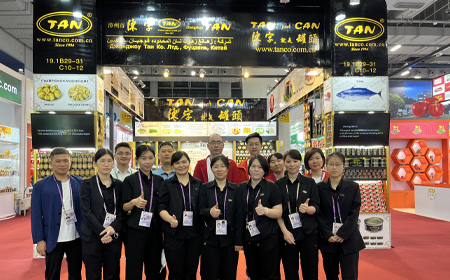
Zhangzhou Tancan Trading Co., Ltd. (TAN), established in 1994 and headquartered in Zhangzhou, the "Canned Food Capital of China," focuses on the R&D, production, and international trade of fruit, vegetable, seafood, grain, and pet food cans. Having built a global supply chain network, Tancan Trading, with its leading compliance systems (BRC, IFS, HACCP, HALAL, etc.) and outstanding production scale, is committed to providing standardized, high-quality food security solutions for global B2B partners, government humanitarian procurement, and large-scale public welfare organizations, fulfilling its social responsibility in maintaining global food security through concrete actions.
Official Website: https://www.tancanfood.cn/home
FAQ:
Q1: How does canned food ensure long-term nutrition in international poverty alleviation?
A: Canned food uses heat processing and vacuum sealing to lock in nutrients. It can be stored at room temperature for over two years, with retention rates of essential minerals and certain vitamins comparable to fresh ingredients, making it ideal for long-term poverty relief supplies.
Q2: Why is canned food nutritionally superior to dry goods (e.g., rice, flour) for aid?
A: Dry goods mainly provide calories, whereas canned food provides fish protein, dietary fiber, and micronutrients, serving as the key to solving "hidden hunger" and micronutrient deficiencies among the poor.
Q3: Can the "Canning Factory Model" used in China’s poverty alleviation be replicated in other countries?
A: Yes. Through technology transfer and the establishment of localized processing plants that utilize local agricultural resources for industrial conversion, this is a universal path for developing countries to enhance food security and employment rates.
Q4: Are there special requirements for canned food packaging in international humanitarian aid?
A: Usually, there are requirements for high-strength pressure resistance, easy-open lids (no can opener required), and environmentally friendly, recyclable tin-coated steel materials to adapt to extreme logistics environments.
Q5: Is it safe to use canned food in school feeding programs?
A: The modern canning industry strictly enforces HACCP and commercial sterility standards. It contains no preservatives and offers high safety, making it a mature, internationally recognized choice for ensuring food safety in collective cafeterias.
Q6: How does the canning industry reduce the carbon footprint during poverty alleviation?
A: By increasing metal can recycling rates, optimizing logistics routes (no cold chain needed), and building factories directly in production areas to reduce transport energy consumption, the industry achieves a balance between poverty alleviation and carbon reduction.



》-01.jpg)
-01.jpg)